

Author: Rowena Winslow
Series: Astrology Made Easy | 289 pages
Available on: Payhip | Amazon | Etsy
Part 1 taught the fast pulse of the chart — Sun, Moon, Mercury, Venus, and Mars, the transits that shape a week or a single day. Part 2 moves into different territory: the slow, generational planets — Jupiter, Saturn, Uranus, Neptune, and Pluto — whose cycles don’t shape a day, they shape a decade. These are the transits behind the years people describe, looking back, as the ones that changed everything.
Check your own chart — the free transit calculator at AstroCore.pro overlays today’s planetary positions on your natal chart, so you can see exactly which of these long cycles is active for you right now. No sign-up.
See it in your own chart
Calculate your current transits free — every planet activating your chart right now. No sign-up.
Check My TransitsWhat This Book Is Actually About
This is, again, not a book of vague forecasts. For each of the five outer planets, Winslow covers its transit to every one of the ten natal planets — and for each combination, spells out the concrete situations it tends to produce: a Saturn conjunction to natal Saturn that pushes someone to leave a job built on shaky ground, a Uranus opposition that ends a long routine overnight, a Jupiter transit that opens a real opportunity versus one that only inflates confidence without substance. The Saturn Return section alone is worth the price of admission — it walks through what that transit tends to look like in the late twenties versus the late fifties, and how differently it plays out depending on what someone has (or hasn’t) built by the time it arrives.
Where Part 1 dealt in weeks and moods, Part 2 deals in chapters and thresholds. The five slow planets covered here don’t announce themselves the way a Mercury retrograde does — their effects build quietly, over months or years, and are often only fully understood in hindsight. This book is built to change that: to help a reader recognize a major cycle while it’s happening, not just after.
What’s Inside
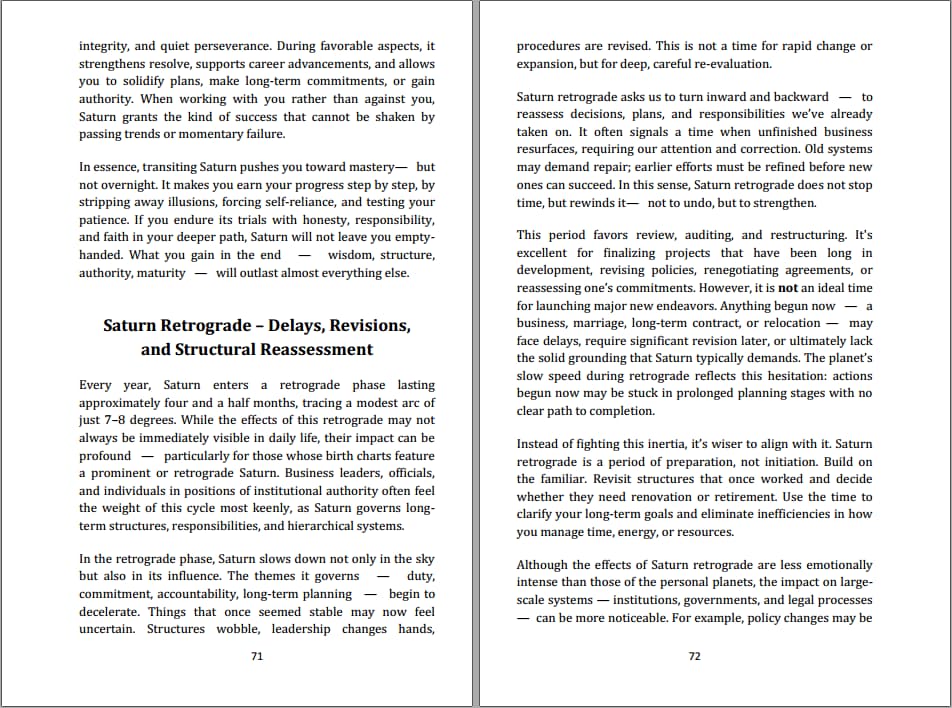
Jupiter — expansion, and its risks. The book doesn’t treat Jupiter as an automatic blessing. It’s clear-eyed about the difference between a Jupiter transit that brings real growth — a promotion, a publishing deal, a meaningful relocation — and one that inflates overconfidence into overreach, bad investments, or legal trouble. The retrograde section covers how Jupiter’s expansive energy turns inward for about four months a year, and why launching something major during that window tends to backfire or need major revision later.
Saturn — the most consequential chapter in the book. Saturn’s transits correspond more consistently than any other planet with real life restructuring: career changes, the end of relationships that weren’t built to last, shifts in responsibility. The Saturn Return — the conjunction of transiting Saturn to natal Saturn, occurring roughly every 29.5 years — gets a full, detailed treatment: what tends to surface in the late twenties, what tends to surface in the late fifties, and how to tell productive restructuring from a crisis that’s spiraling.
Uranus — the transit that produces events, not just moods. Unlike Neptune or Pluto, Uranus tends to be abrupt and visible. The Uranus opposition — occurring around age 42, when transiting Uranus opposes its own natal position — is covered as one of the defining midlife transits: a sudden demand for authenticity that can upend a routine that’s quietly stopped fitting.
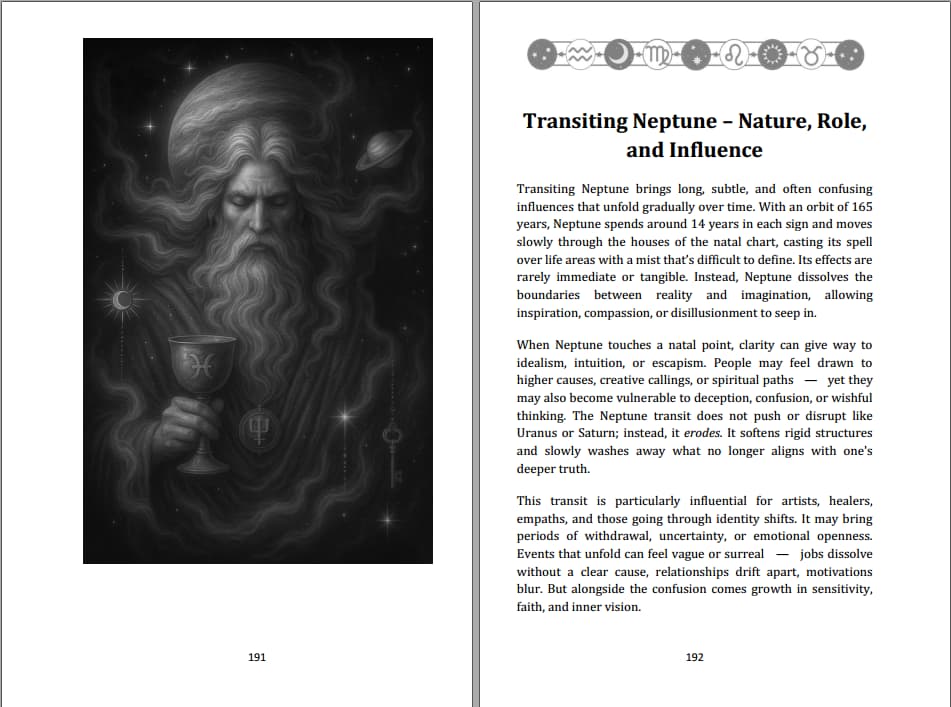
Neptune and Pluto — the slowest, hardest-to-see influences. These two get careful treatment precisely because their effects are the easiest to miss while they’re happening. Neptune’s dissolving, idealizing influence and Pluto’s deep transformational pressure are both covered with practical guidance on staying grounded while a transit like this is active — since both planets can make it genuinely difficult to see a situation clearly in real time.
Each of the five planets also gets its own retrograde section — what changes when the planet turns inward, and concrete guidance on what to do (and avoid) while it’s active.
Who This Book Is For
Readers who’ve read Part 1 and are ready for the deeper, slower half of the system — this book assumes that foundation. It’s especially useful for anyone trying to make sense of a year that felt disproportionately heavy or transformative: the framework here is what turns “why did this happen now” into a legible, chart-based answer. And for anyone approaching a milestone age — late twenties, early forties, late fifties — this is the volume that shows what’s actually coming, instead of leaving it as a vague sense that “something’s shifting.”


Also by Rowena Winslow
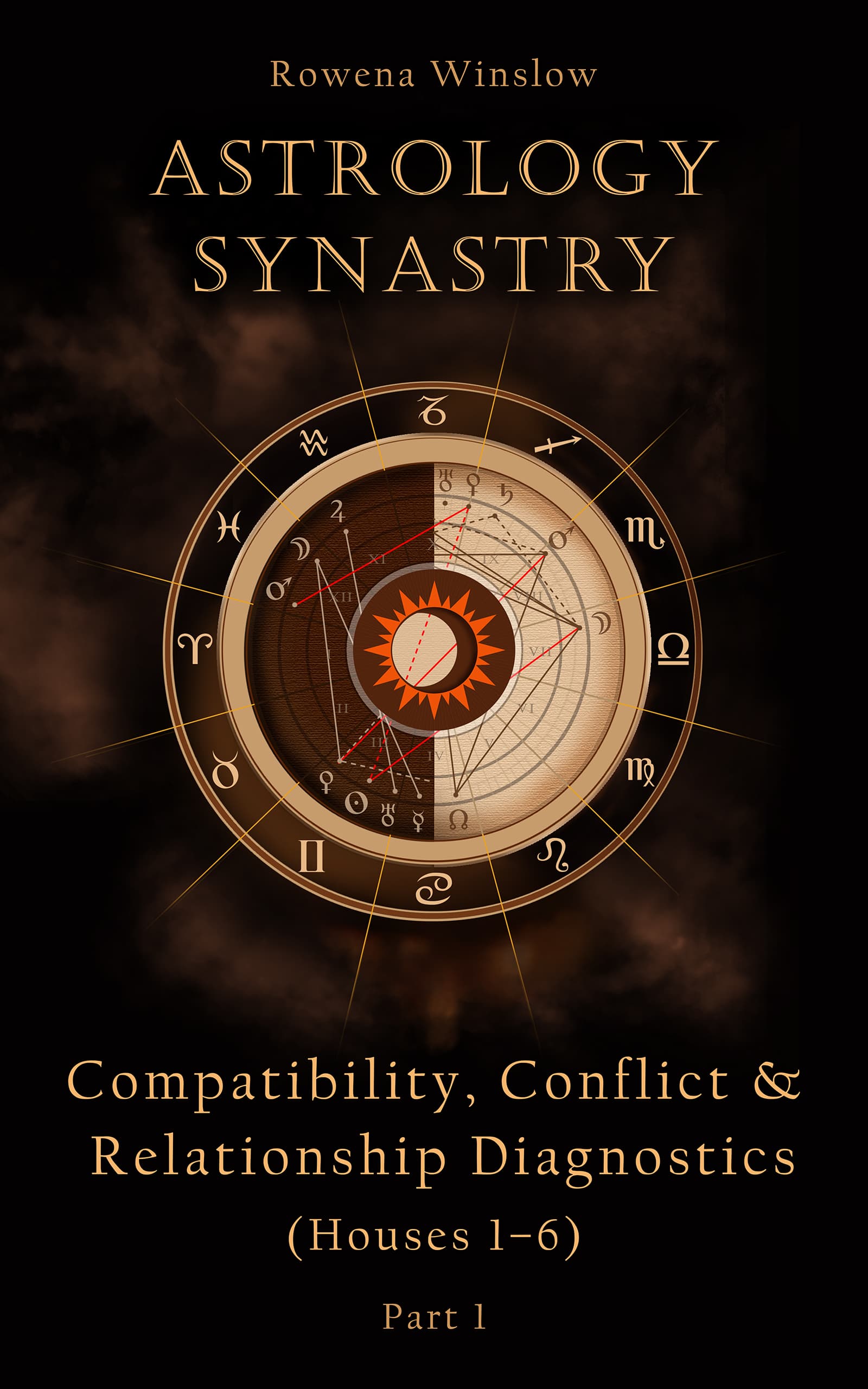
You can continue your study of astrology with the following volumes:
NATAL ASTROLOGY
- Vol. 1 — Zodiac Signs and Horoscope Houses in the Birth Chart
- Vol. 2 — Planets & Aspects in the Birth Chart
PREDICTIVE ASTROLOGY
- Transits & Planetary Cycles, Part 1 — Sun, Moon, Mercury, Venus, Mars
- Transits & Planetary Cycles, Part 2 — Jupiter, Saturn, Uranus, Neptune, Pluto
SYNASTRY
SOLAR RETURN ASTROLOGY
- Part 1 — Sun, Moon, Mercury
- Part 2 — Venus, Mars, Jupiter, Saturn
- Part 3 — Chart Overlays & Interpretation
OTHER SPECIALIZED TOPICS
To work with transits in real time, use the free transit calculator at AstroCore.pro — it generates a dual chart showing your natal positions and current planetary placements together, so you can apply what this book teaches directly to your own chart.



Leave a Reply