
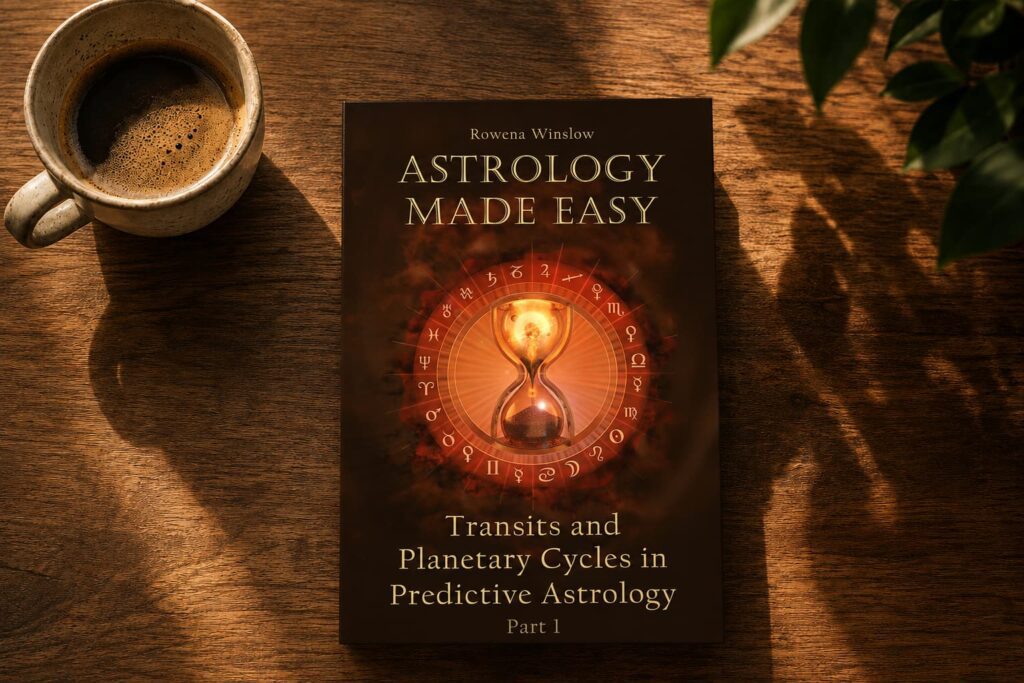
Author: Rowena Winslow
Series: Astrology Made Easy | 290 pages
Available on: Payhip | Amazon | Etsy
This new volume answers the question every reader eventually asks: when? When will things shift? When is the right moment to act, to wait, to rebuild? Transits and Planetary Cycles in Predictive Astrology is published in two parts — Part 1, covering the fast, personal planets, and Part 2, covering the slow, generational ones. This review looks at Part 1.
Check your own chart — the free transit calculator at AstroCore.pro overlays today’s planetary positions on your natal chart, so you can apply what this book teaches directly to your own life. No sign-up.
See it in your own chart
Calculate your current transits free — every planet activating your chart right now. No sign-up.
Check My TransitsWhat This Book Is Actually About
This is not a book of vague moods and general “energy.” For each of the five personal planets, Winslow walks through its transit to every one of the ten natal planets in turn — and for every combination, spells out the concrete life events and situations it tends to correspond to: a new relationship beginning, a difficult conversation finally happening, a burst of confidence around a career move, a friction-filled week that ends in confrontation. If you’ve ever wanted a reference that tells you not just “Mars is active” but what that tends to look like in real life, that’s exactly what this book is built to deliver.
That said, Winslow is careful about the frame: transits aren’t fortune-telling in the sense of naming one fixed, unavoidable outcome. What the book gives you is sharper than a vague mood and more honest than a guaranteed prophecy — a detailed map of the kind of event a given transit tends to produce, and the timing window in which it’s most likely to surface. Knowing that transiting Mars is squaring your natal Sun doesn’t just tell you “there’s tension” — the book tells you what forms that tension characteristically takes, and what to do with it.
Part 1 focuses on the five personal planets: Sun, Moon, Mercury, Venus, and Mars. These are the planets that move fast enough to shape a week or a single day rather than a decade, which makes this the volume readers reach for when they want to understand this month, not just the arc of a lifetime.
What’s Inside
The foundations of transit reading. Before any planet is covered individually, the book lays real groundwork: what a transit actually is, how to cast a transit chart by overlaying today’s sky onto the natal chart, and — crucially — how to identify which life domain each transiting planet governs based on the houses it rules natally. A transiting Mercury doesn’t just mean “communication” in the abstract; if Mercury rules your 2nd house, its transits touch money and values, if it rules your 7th, they touch partnerships. This single reframe is what turns generic transit lists into something that actually applies to one person’s chart.
Aspects, orbs, and timing. A full section on how aspects function in predictive work: orb allowances that shrink as the planets speed up, the difference between an aspect that’s still building and one that’s already fading, and — the standout section — trigger transits and multi-pass activation. This explains why a big configuration can sit dormant for weeks until a fast-moving planet like the Moon sets it off, and why an aspect that first appears as a passing thought can return in full force once the planet involved turns retrograde. It’s one of the clearer explanations of why certain periods feel like they “won’t let go.”
A working hierarchy of planets. Rather than treating every transit as equally weighty, the book is upfront about scale: Jupiter and Saturn as markers of real turning points, the five personal planets as the engine of daily and weekly experience, Uranus/Neptune/Pluto working quietly in the background (their turn comes in Part 2). Knowing where to focus attention before diving into the aspect tables saves a reader from treating a same-day Moon transit with the same weight as a career-defining Saturn transit.
Five Planets, Covered in Full Depth
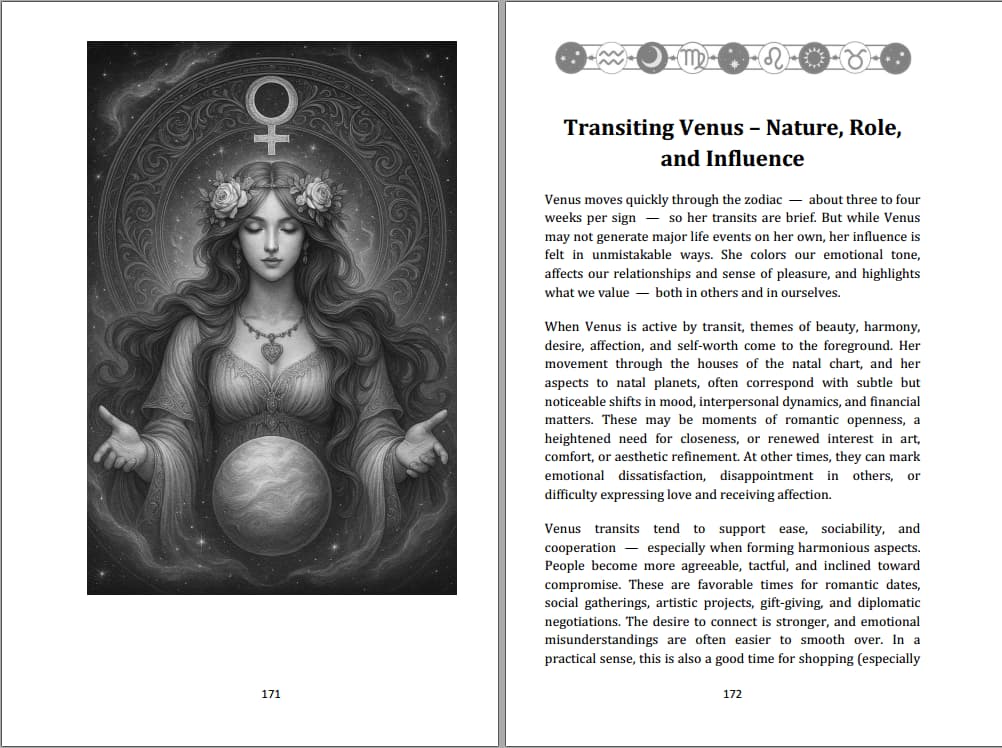
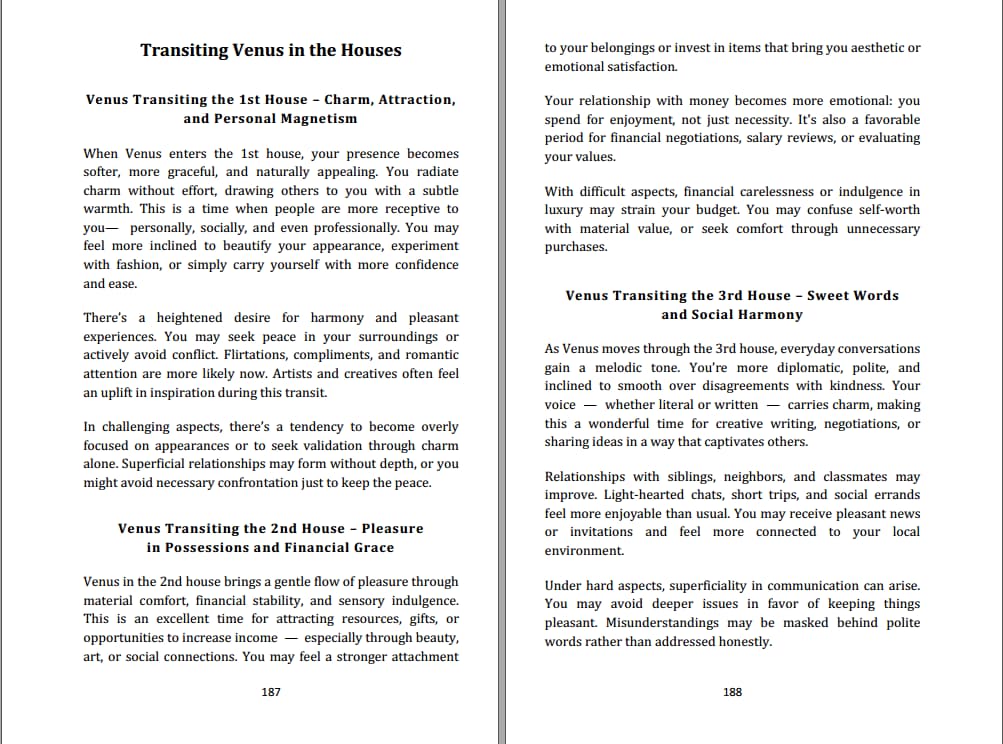
The heart of the book is five planet chapters — Sun, Moon, Mercury, Venus, Mars — each built the same way: the planet’s nature and role in predictive work, its transit through all twelve signs, its transit through all twelve houses, and its aspect to every one of the ten natal planets in turn, with the specific life situations each combination tends to bring. That’s a genuinely comprehensive reference, not just a study guide — the kind of book you keep open next to your own chart rather than read once and shelve.
Mercury, Venus, and Mars each get a dedicated retrograde section — what the retrograde means for that planet’s themes, how the energy turns inward and delayed, and concrete guidance on what to do (and avoid) while it’s active. The Mercury retrograde section goes past the familiar “don’t sign contracts” warnings into the deeper psychological pattern of revisiting the past, and ties it directly back to the multi-pass mechanism explained earlier in the book.
The Moon chapter is worth singling out: at 28 days per full cycle, it’s the fastest-moving transit there is, and the house-by-house section on lunar transits does a genuinely useful job of explaining why some days reliably feel heavier or lighter than others — and how to plan around that instead of just enduring it.
Who This Book Is For
Readers who already know their own birth chart — their signs, houses, and aspects — and are ready to see how it comes alive in real time. It’s equally useful to anyone who wants to look back at a rough week or a surprisingly good one and finally understand why — the transit framework makes past patterns legible in a way that’s often quietly revelatory. And for anyone timing a decision — when to launch, when to wait, when to have the hard conversation — this is the volume that turns “why now” into an answerable question, with concrete guidance for each of the five planets. Part 2, covering Jupiter, Saturn, Uranus, Neptune, and Pluto, picks up where this one leaves off — the slower cycles behind life’s biggest chapters.


Also by Rowena Winslow
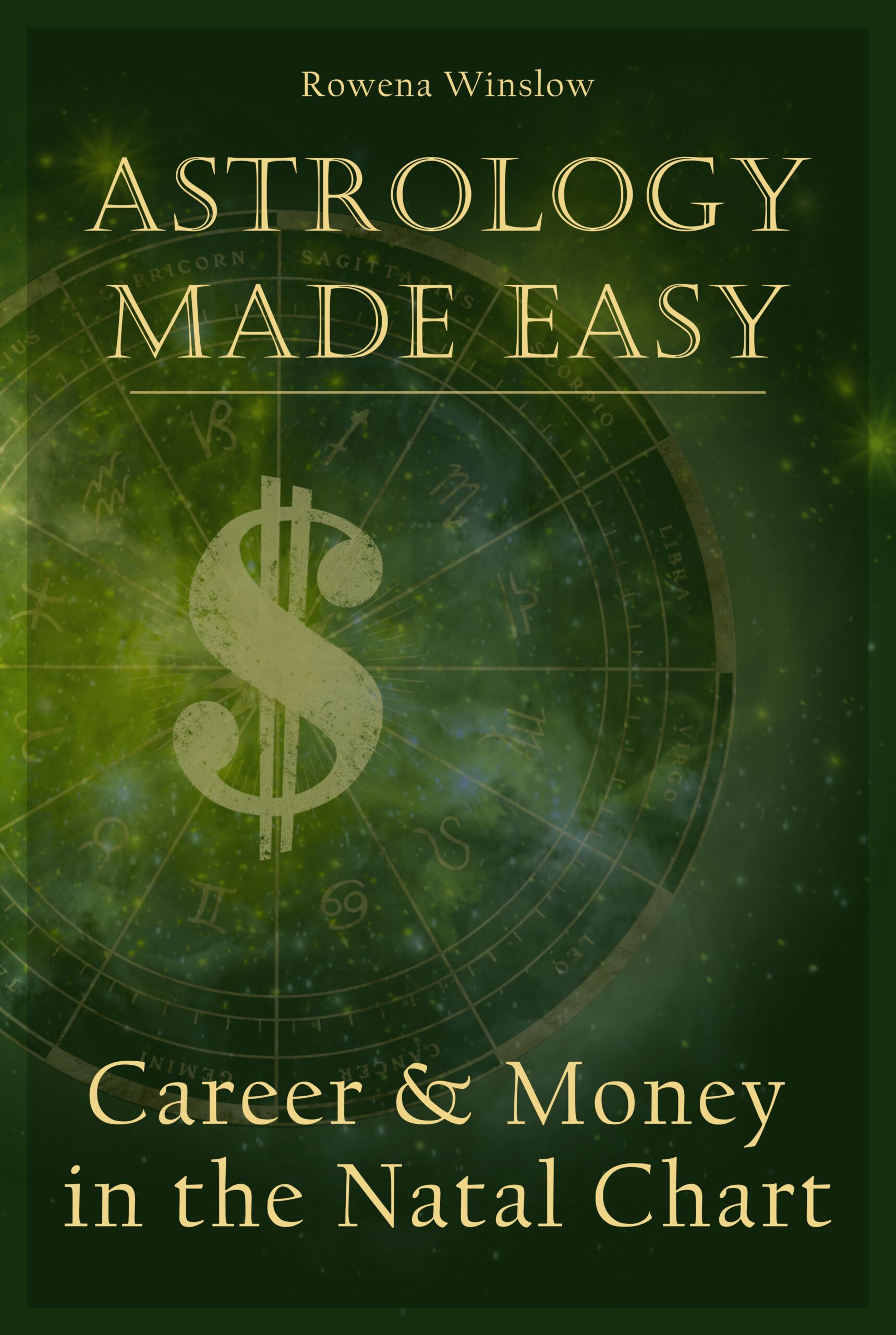
You can continue your study of astrology with the following volumes:
NATAL ASTROLOGY
- Vol. 1 — Zodiac Signs and Horoscope Houses in the Birth Chart
- Vol. 2 — Planets & Aspects in the Birth Chart
PREDICTIVE ASTROLOGY
- Transits & Planetary Cycles, Part 1 — Sun, Moon, Mercury, Venus, Mars
- Transits & Planetary Cycles, Part 2 — Jupiter, Saturn, Uranus, Neptune, Pluto
SYNASTRY
SOLAR RETURN ASTROLOGY
- Part 1 — Sun, Moon, Mercury
- Part 2 — Venus, Mars, Jupiter, Saturn
- Part 3 — Chart Overlays & Interpretation
OTHER SPECIALIZED TOPICS
To work with transits in real time, use the free transit calculator at AstroCore.pro — it generates a dual chart showing your natal positions and current planetary placements together, so you can apply what this book teaches directly to your own chart.


Leave a Reply