
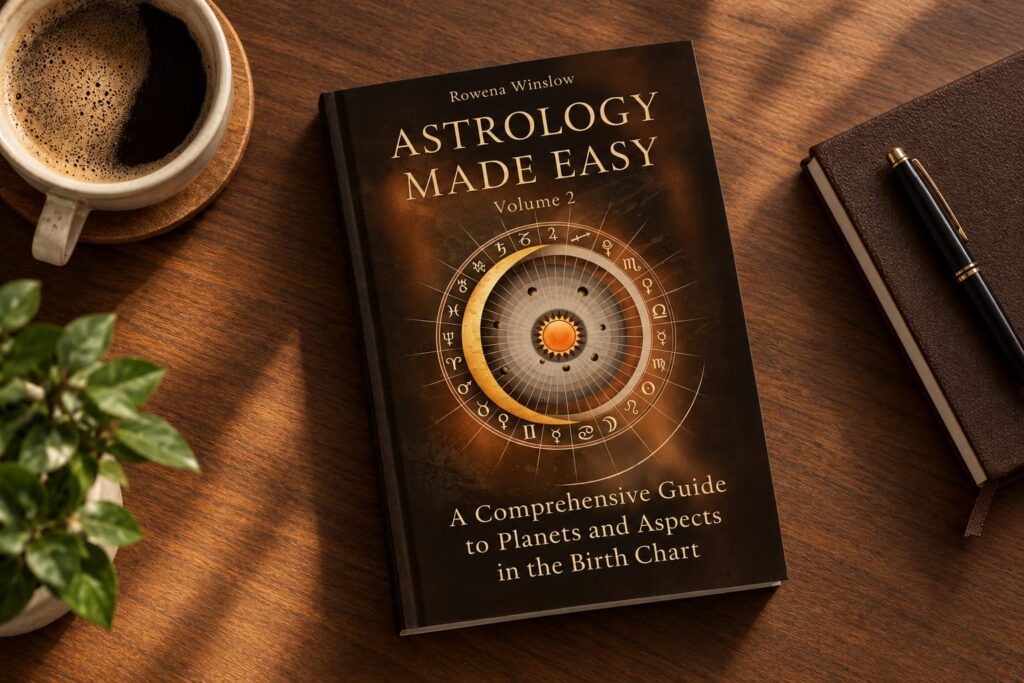
Author: Rowena Winslow
Series: Astrology Made Easy, Volume 2 | 419 pages
Available on: Payhip | Amazon | Etsy
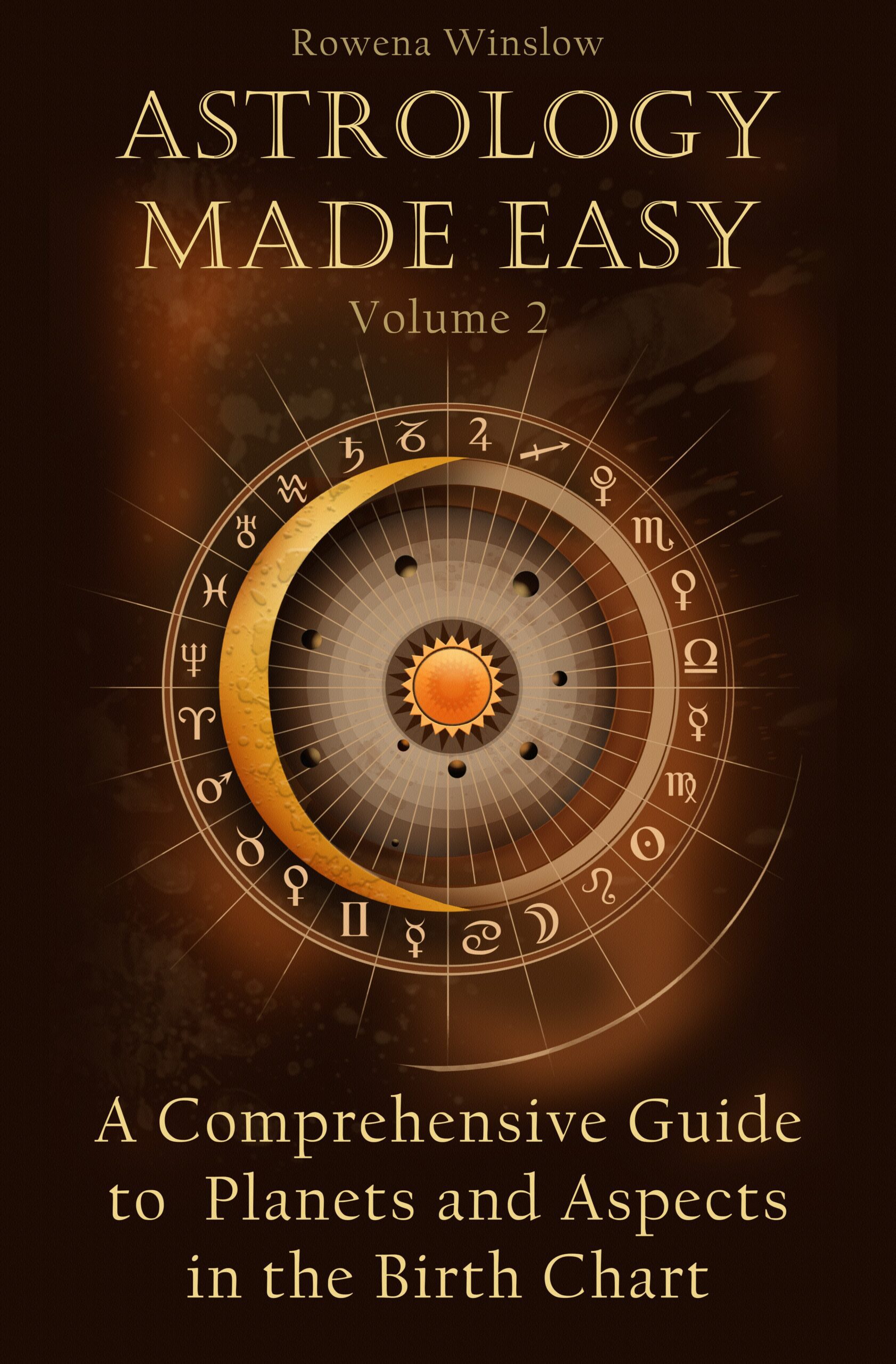
If Volume 1 gave you the stage — the signs and houses — Volume 2 introduces the actors. This is the book that makes a birth chart come alive: not just as a diagram, but as a story with real characters, real drives, and real psychological depth.
Astrology Made Easy: A Comprehensive Guide to Planets and Aspects in the Birth Chart follows the same approach as the first volume — rich material, plain language, organized for actual use. It covers ten planets in full depth, plus a thorough treatment of aspects and how planetary energies interact across the chart.
See it in your own chart
Calculate your natal chart free — with a real interpretation of your Sun, Moon, and Ascendant. No sign-up.
Calculate My ChartWhat’s Inside
Foundations: Planets and Aspects as a System
The book opens with two chapters that lay the conceptual groundwork before any planet is covered individually.
Chapter 1 covers everything you need to understand how planets function in a chart: dignity and debility (domicile, exaltation, detriment, fall), the distinction between personal and outer planets, benefic and malefic classifications, and less commonly covered topics like cazimi, combust, and planets under the Sun’s beams. There is also a full section on planetary motion — direct, retrograde, and stationary — and what each means for how a planet’s energy expresses in the natal chart.
Chapter 2 covers aspects: what they are, how they work, and the five main types — conjunction, sextile, trine, square, and opposition — each explained clearly with practical examples. The chapter also covers orb allowances and how to weigh aspects when multiple are active.
This is the kind of foundational material most books either skip or bury. Here it comes first, so everything that follows has context.
Ten Planets — Each Covered on Four Levels
The heart of the book is ten full planet chapters: Sun, Moon, Mercury, Venus, Mars, Jupiter, Saturn, Uranus, Neptune, and Pluto. Each chapter is structured consistently across four levels of interpretation:
- The symbolism of the planet — its core psychological function, what it represents in the chart, and how its energy operates across different life areas
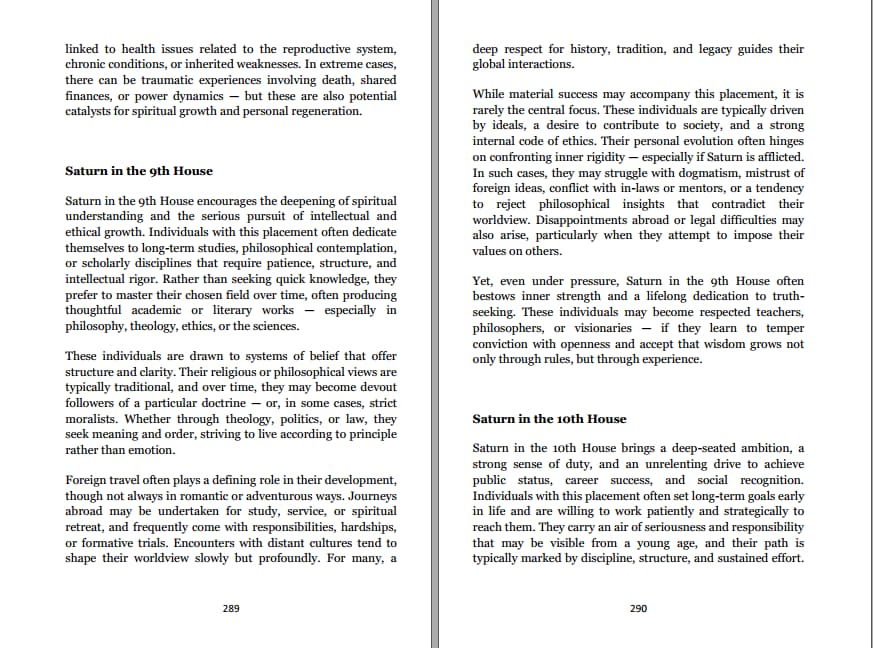
- The planet in each of the twelve houses — where in life that planetary energy is most active and how it shapes the corresponding domain
- The planet in each of the twelve zodiac signs — how the sign modifies the planet’s expression (this section is included for the Moon, Mercury, Venus, Mars, Jupiter, Saturn, Uranus, Neptune, and Pluto)
- Aspects between the planet and other planets — how the planetary energy interacts with each other major planet through conjunction, sextile, trine, square, and opposition
This four-layer structure means every planet is covered completely — not just symbolically, but practically. You can look up any placement and find a real, usable interpretation.
What Makes Individual Planet Chapters Stand Out
A few highlights worth noting:
The Sun chapter opens with a precise treatment of solar identity — not personality in the everyday sense, but the deeper question of core purpose and self-expression. The house placements are particularly detailed, showing how solar energy manifests differently depending on whether it falls in the 1st, 8th, 10th, or 12th house.
The Moon chapter goes beyond emotion and habit. Winslow covers the Moon’s role in physical and emotional health, its connection to maternal patterns and early conditioning, and how its aspects with the Sun reflect the integration (or tension) between the inner and outer self. The Moon through the signs section is one of the most thorough treatments of Moon sign interpretation available in a single volume.
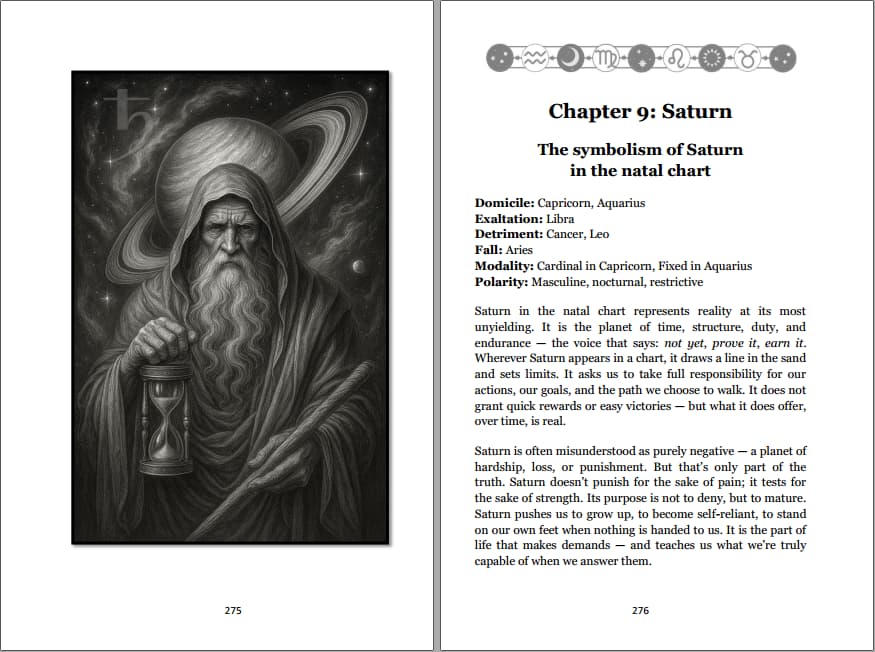
The Saturn chapter is especially strong. Saturn tends to be either over-feared or oversimplified in popular astrology. Here it receives a balanced, psychologically grounded treatment — covering its role in discipline, structure, limitation, and the kind of mastery that comes through sustained effort rather than natural ease.
The outer planets — Uranus, Neptune, Pluto — are covered with the same depth as the personal planets, including house and sign placements. These chapters are useful both for natal interpretation and for understanding the generational layer of any chart.
Aspects Throughout
Rather than treating aspects as a separate topic confined to one chapter, the book integrates aspect interpretation into each planet’s chapter. So when you read about Venus, you’ll find the full section on Venus aspects — Venus conjunct Mars, Venus square Saturn, Venus trine Jupiter, and so on — in context, which is how they’re most useful in practice.
Who This Book Is For
Anyone who has read Volume 1 and is ready to move from the framework to the actors in the chart. The two volumes work as a unit — Volume 1 gives you the structure, Volume 2 gives you the content that fills it.
Students who feel confident about signs and houses but find planets and aspects harder to interpret precisely. The consistent four-layer structure for each planet makes it easier to build fluency systematically rather than picking up fragments from different sources.
Practicing astrologers who want a well-organized reference. The planet-in-house and planet-in-sign sections are written for quick consultation mid-reading, not just for initial study.
Also by Rowena Winslow
You can continue your study of astrology with the following volumes:
Natal Astrology
- Vol. 1 — Zodiac Signs and Horoscope Houses in the Birth Chart
- Vol. 2 — Planets & Aspects in the Birth Chart
Predictive Astrology
- Transits & Planetary Cycles, Part 1 — Sun, Moon, Mercury, Venus, Mars
- Transits & Planetary Cycles, Part 2 — Jupiter, Saturn, Uranus, Neptune, Pluto
Synastry
Solar Return Astrology
- Part 1 — Sun, Moon, Mercury
- Part 2 — Venus, Mars, Jupiter, Saturn
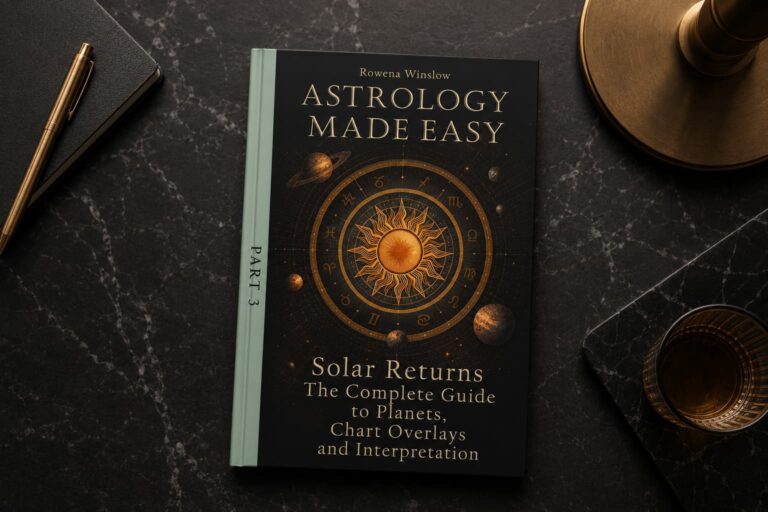
- Part 3 — Chart Overlays & Interpretation
Other Specialized Topics
Calculate your free natal chart at AstroCore.pro — have it open while you read. Every chapter will immediately connect to something real in your own chart.


Leave a Reply