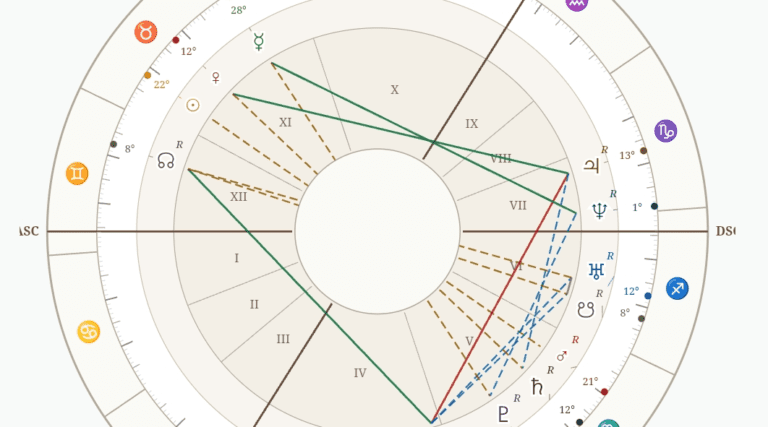
A chart reading is not fast. And anyone who tells you otherwise is not doing it properly.

Practicing Astrologer · Author of the Astrology Made Easy Series
The Charts That Take Longer
The straightforward charts — where everything is relatively clear, where the person’s strengths and challenges sit in obvious places — those still take time. But the difficult charts, the ones with serious negative indicators, take considerably longer. Because before you say anything, you look at the same configuration from every possible angle. You check what else in the chart modifies it. You think about how to say what needs to be said in a way the person can actually hear and use. That process cannot be rushed.
And yes — the difficult things have to be said. Hiding them is not kindness. It is a waste of the person’s time and money, and frankly, it is a betrayal of what this work is for.
Here is a real example of what “difficult” looks like in practice. Some charts show a specific, consistent vulnerability to accidents involving water. Not a vague sensitivity — a real, identifiable pattern. When I see this, I say it directly: be careful around water. Don’t accept a dare to swim across a river at night. Don’t assume you are invincible in situations involving the sea. This is not meant to frighten anyone. It is meant to keep them alive. The person who knows this about themselves makes different choices — small, quiet choices that most people never think about — and those choices matter. That is the point of the information.
But the moments that stay with me are not the warnings. They are the moments when the chart says something the person never asked about — and it turns out to be the most important thing in the reading.
People almost always come with the wrong question. Not wrong in the sense of stupid — wrong in the sense that they are focused on the symptom rather than the source. Someone comes asking about money. The chart shows that money is not actually the main event right now. What the chart is pointing to is travel — a specific connection with foreign places or people that is about to reorganize their entire life, including the financial situation they were worried about. I tell them this, I push on it, I make sure they hear it even if it was not what they came for. And six months later they write back in genuine shock to say that a journey changed everything. They had been asking about the wrong thing. The chart was answering the right one.
How Did You Know That?
The reaction I get most often after a reading is some version of: how did you know that?
Sometimes it is about something professional — a pattern in how they earn money, or why a particular kind of work has always felt wrong even when it looked right on paper. Sometimes it is about family dynamics they have never spoken about to anyone. And sometimes — more often than people expect — it is about sex.
This is one of the areas where astrology is most genuinely useful and most consistently surprising. People carry enormous confusion about their own sexual nature. They assume the problem is their partner, or their circumstances, or some personal failing they cannot quite identify. But the natal chart describes sexual nature with a frankness that most people have never encountered. What actually drives someone. What they need but have never asked for. What creates distance for them, and why. When you name these things accurately — when you describe something the person has felt their entire life but never had words for — the relief is visible even in a written response. Things fall into place. They stop blaming the wrong person, including themselves. They understand something real about how they are built, and that understanding makes everything easier to navigate.
That is what “how did you know that?” actually means. It means: you described something I have never told anyone, and you got it right.
What the Chart Actually Does
Now — the chart does not predict your future. I want to be clear about this because it matters. The chart shows how you respond to circumstances. It shows what forces are active in your life, what patterns you carry, what terrain you are moving through. It does not dictate what happens. Two people with nearly identical charts — same planetary positions, same aspects — can live completely different lives. An educated, self-aware person navigates the same configuration in ways that would be unrecognizable to someone who has never examined their own patterns. The chart shows the weather. What you build in that weather is entirely yours.
The reading also becomes more precise when I know more about the person’s actual life. This is not a limitation — it is how good interpretation works. Mercury retrograde in a chart indicates delays with documentation, problems in communication, disruptions to movement and logistics. That means something very specific if the person is a notary or a courier. It means something different if they work in a field where paperwork is minimal. The chart provides the signal. Context tells me exactly where it lands. The more you share about your life — your work, your family, the general shape of things — the more accurate and specific the reading becomes.
The Difference a Person Makes
This is the difference between a report generated by software and a reading done by a person who has spent years looking at charts. The software sees the symbols. The astrologer sees the person behind them.
Ready for your own reading? →