
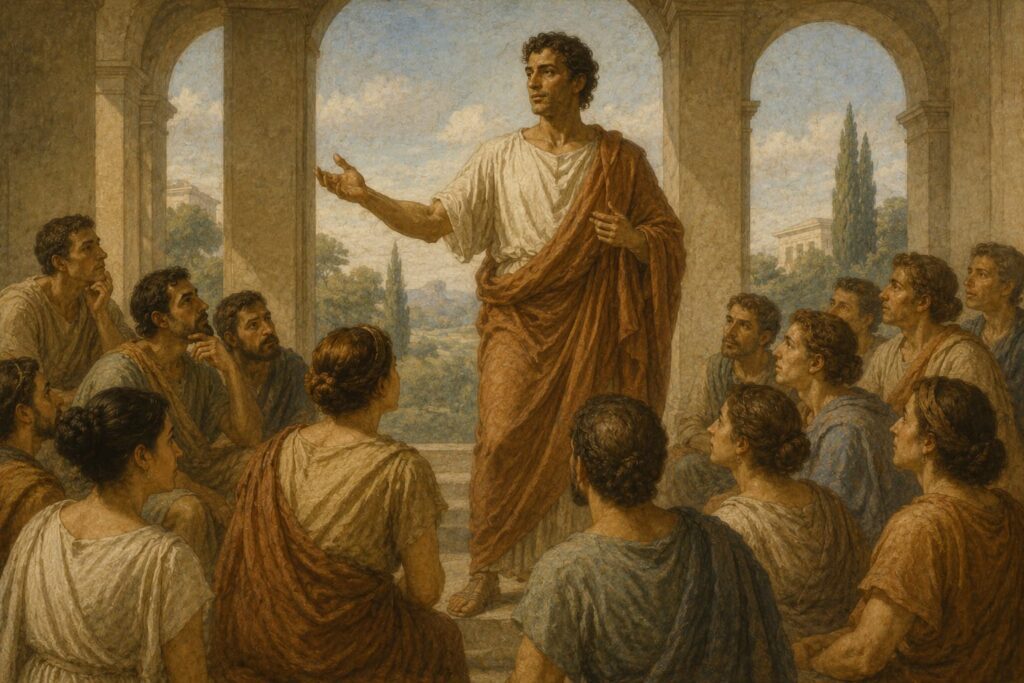
Some people walk into a room and the room changes. Not because of what they say or do — before they say or do anything — but because of something in the quality of their presence. Others can learn to project authority, to speak confidently, to manage the impression they make. But the natural leader is doing something different. They are not managing anything. They simply are.
The chart describes this quality with precision. Charisma is not a single placement — no single planet or house produces it. It is a specific constellation of configurations that together create the experience of someone whose presence is inherently compelling.
The Sun: the core of natural authority
The Sun is the primary planet of leadership and authority. Its position, strength, and aspects determine the fundamental quality of the person’s public self — whether it radiates with genuine force or whether it is muted, conflicted, or redirected.
The Sun in the 1st House, strong and unafflicted, is one of the clearest charisma indicators in any chart. The description from the classical tradition is specific: a strong sense of personal dignity, self-confidence, the natural tendency toward public activity, generosity and nobility of character, optimism, a sense of justice, and the contempt for meanness and baseness that makes others trust this person’s judgment. This is not performed authority. It is the quality of a person whose identity and public presence are genuinely aligned — who is, visibly, who they appear to be.
The tradition adds a significant observation about the Sun in the 1st House: these people often have original and unconventional ideas and the specific drive to put them into practice — not just to lead but to lead somewhere particular, toward something they have actually envisioned.
The Sun in harmonious aspect to Jupiter is the aspect combination most directly associated with the experience of natural authority among professionals and peers. The qualities it produces — optimism, enthusiasm, ambition, expansiveness — are the qualities of genuine leadership rather than merely hierarchical position. Sun–Jupiter people do not simply hold power. They generate the specific expansive energy that causes others to want to follow.
The Sun in harmonious aspect to the Moon produces what the tradition describes as a strong democratic impulse — the capacity to lead not through dominance but through genuine attunement to the needs and direction of the group. These people tend toward leadership, but without aggression or egotism; their activity is directed toward the benefit of others and the community. This is the charisma of the genuinely trusted leader, whose authority comes not from force but from the felt experience that this person understands and cares about what matters to those around them.
Venus: the magnetic pull
Venus governs attractiveness, social ease, and the quality of warmth that draws others toward a person. Its position and aspects determine whether the person has genuine social magnetism or merely apparent social competence.
Venus on the Ascendant is the most powerful Venus placement for immediate personal charm. The tradition’s description of charm (обаяние) identifies this as the primary indicator: Venus on the Ascendant, in harmonious aspect to the Moon or Mercury, in signs associated with beauty and social grace. The person with Venus on the Ascendant creates an immediate impression of attractiveness, warmth, and approachability that operates independently of what they actually do or say. Others are drawn in before the content of the interaction begins.
The aspect cluster that produces social charm most reliably is Moon–Sun–Venus in harmonious configuration: the Sun provides the core identity and authority; the Moon provides the emotional intelligence and attunement; Venus provides the warmth and grace that makes the authority feel welcoming rather than threatening. Together, they describe the person whose presence feels both compelling and safe — an unusual and rare combination that produces genuine and durable personal magnetism.
Jupiter: the expansive presence
Jupiter is the planet of expansion, optimism, and the quality of abundance that makes others feel enlarged in someone’s company rather than diminished. A well-placed Jupiter creates the experience of genuine generosity — the sense that the person’s attention and energy are available, that contact with them is nourishing rather than depleting.
Jupiter on the Midheaven or Ascendant is one of the most consistent charisma indicators in any chart. The angular Jupiter makes the Jupiterian quality of expansive warmth and generous authority immediately available to the surrounding environment — not something that has to be accessed through specific circumstances but a quality that permeates the person’s presence in any context.
The tradition identifies the Sun–Moon–Jupiter configuration as one of the primary indicators for genuine popularity — the capacity to be genuinely liked and trusted by large numbers of people, not through manipulation or strategy but through the natural expression of qualities others recognize as good. These are the people who inspire not just admiration but genuine affection — a rarer and more durable form of influence than authority alone produces.
Pluto: the magnetic intensity
Not all charisma is warm. Some of the most compelling personal presences in history have carried not the generous warmth of Jupiter-Venus but the intense, slightly dangerous quality of Pluto — the pull toward someone whose depth and force of personality creates a specific fascination that is not quite comfortable.
Pluto on the Ascendant or in strong aspect to the Ascendant ruler describes a personal presence that commands attention through sheer intensity — through the quality of someone who is operating at a depth and with a force that others sense but cannot always explain. This is magnetic in the literal sense: others are drawn without fully knowing why, and the attraction has a quality of inevitability.
The tradition identifies the combination of Pluto and the Ascendant — particularly with Moon and Pluto in configuration — as one of the indicators for a certain kind of public magnetism that verges on the hypnotic. Hitler’s chart, as noted elsewhere, carried precisely this quality: the ability to operate on audiences not through the content of argument but through the direct transmission of psychological force. This is Plutonian charisma at its most extreme expression.
The person with strong Pluto aspects to the Ascendant does not experience themselves as particularly charismatic. They experience themselves as simply being who they are, at full force. The charisma is the side effect of the intensity, not the intention.
The Leo Ascendant and Sun-ruled charts
The Leo signature in a chart — particularly a Leo Ascendant, or the Sun ruling the chart from a prominent position — carries a specific quality of natural theatrical authority: the ability to perform presence, to fill a space, to be seen and recognized as someone of significance.
What the Leo Ascendant produces at its best is not vanity or self-absorption but the genuine gift of making others feel seen and recognized in return. The Leo presence acknowledges those around it — and that acknowledgment, that warmth of being genuinely noticed by someone whose notice feels significant, is one of the most powerful forms of charismatic influence.
What charisma actually does
In twenty years of reading charts, I have sat with people who carried every configuration described above — and people who carried none of them and had nonetheless built lives of genuine influence and leadership. The chart configurations describe the natural endowment. What determines whether that endowment becomes actual influence depends on what the person does with it.
What I have found consistently is that the most durable form of charisma — the kind that produces genuine loyalty and lasting influence rather than temporary fascination — almost always involves the combination of the Sun–Moon–Jupiter warmth with a specific quality of genuine seeing. The charismatic leader is the person who, in your presence, makes you feel that what you are and what you think genuinely matters to them. That quality is partly planetary configuration. It is also a choice, made repeatedly, to direct the natural force of the chart toward the people in the room.
The chart gives you the instrument. What you play on it is yours to determine.
You can calculate your natal chart at AstroCore. If you want to understand what your chart shows about your specific quality of presence and how others experience you, a full natal chart reading addresses this directly.
Rowena Winslow is a professional astrologer and the author of the Astrology Made Easy series. Her practice covers natal chart interpretation, Solar Returns, and predictive astrology. astrocore.pro


Leave a Reply