

Every year, someone looks at their Solar Return chart and sees a retrograde planet — and immediately assumes the worst.
Mercury retrograde in the Solar Return? This whole year is going to be a communication disaster.
Venus retrograde? My love life is doomed.
Mars retrograde? I won’t be able to get anything done.
Here’s what’s actually true: retrograde planets in the Solar Return don’t describe a year of malfunction. They describe a year with a fundamentally different orientation — one that, understood correctly, can be genuinely productive in ways a straightforward year often isn’t.
The key word is inward.
See it in your own chart
Calculate your Solar Return free and see what your year ahead is built around. No sign-up.
Calculate My Solar ReturnFirst: Which Retrogrades Actually Matter?
Before we go any further — not all retrogrades in the Solar Return are equally significant. In fact, most of them aren’t worth your attention at all.
Jupiter, Saturn, Uranus, Neptune, and Pluto are each retrograde for roughly half the year. That means approximately half the population has any given outer planet retrograde in their Solar Return at any given time. When something is that common, it loses individual significance. If you have Saturn retrograde in your Solar Return, so does everyone born within several months of you. It’s not a meaningful personal indicator.
The retrogrades that do carry genuine individual weight are Mercury, Venus, and Mars. These three are retrograde far less frequently — Mercury roughly every six years in a Solar Return, Venus approximately every eight years, Mars approximately every two years. When one of these appears retrograde in your Solar Return, it’s a genuinely distinctive feature of that year, worth taking seriously.
Mercury Retrograde in the Solar Return
What it actually means
Mercury retrograde in the Solar Return appears roughly once every six years. When it shows up, it describes a year in which the mind is oriented primarily inward rather than outward — toward integrating, reorganizing, and genuinely assimilating what’s already known, rather than racing to acquire new information or incorporate others’ perspectives.
A useful image: think of the mind during a Mercury retrograde Solar Return year as a filing cabinet that’s completely full. Any new information that arrives spills over and isn’t retained — not because intellectual capacity is reduced, but because the existing material needs thorough organization before new additions can be genuinely integrated.
This is not an intellectual failure year. It’s a consolidation year.
What this year is actually good for
Original work that draws on what you already know. This is one of the best placements for writing that requires sustained self-directed intellectual engagement — memoir, original research, personal essays, anything that demands deep integration of accumulated knowledge and experience. The mind this year is less receptive to outside input and far more capable of producing something original from its own internal resources.
Reconsidering decisions you’ve been deferring. Mercury retrograde in the Solar Return describes a year when internal reassessment produces real clarity — not because life forces a decision, but because the inward orientation of the intellect finally creates the space to think something through to its actual conclusion.
Selective communication. People with this placement often find they become more deliberate about what they share and with whom. The year naturally produces a more considered, more private intellectual style. This is not the year to speak first and think later.
What to watch for
The main challenge of a Mercury retrograde Solar Return is that the inward orientation can tip into isolation or excessive self-reliance when collaboration would genuinely help. The inclination to work things out privately can be genuinely productive — but it can also become a reason to avoid conversations that would actually move things forward.
The house Mercury occupies tells you where this inward intellectual quality is most active. Mercury retrograde in the 3rd house describes introspective intellectual work in communication and learning. In the 6th house, it often brings careful private reassessment of health and work systems. In the 10th, it’s a year of private professional reconsideration that precedes a more visible reorientation.
A real example
A client with Mercury retrograde in her Solar Return 2nd house spent the year reviewing her finances with unusual thoroughness — not seeking outside advice, but working systematically through her own understanding of her financial situation, her actual values around money, and the gap between the two. She made no dramatic changes during the year. What she produced was a clarity about her genuine financial priorities that previous years’ more outward-directed financial activity hadn’t provided. The decisive changes she made the following year were directly rooted in that year’s quiet internal work.
Mercury retrograde doesn’t block the outcome. It changes the route — inward first, then outward.
Venus Retrograde in the Solar Return
What it actually means
Venus retrograde in the Solar Return is rarer than Mercury retrograde — it follows an eight-year cycle and returns to approximately the same sign each time. When it appears, it profoundly affects the domains of relationship, values, and material life, but not in the way most people fear.
Venus retrograde in the Solar Return is not “a bad year for love.” It’s a year of comparison — of measuring inner experience against external circumstances, and asking whether what you’re pursuing actually corresponds to what you genuinely value.
The central question of a Venus retrograde Solar Return year is: does what I have, or what I’m working toward, actually match what matters to me? Not what looks successful from outside. What genuinely matters from within.
The answer to that question — arrived at honestly — tends to produce reassessments that are both personally authentic and occasionally surprising to people who observe them from outside.
What this year is actually good for
Getting honest about relationships. Venus retrograde years produce unusually clear inner assessments of relational quality. Not “does this relationship look good on paper?” but “is the actual daily experience of this relationship genuinely nourishing?” The difference between those two questions is sometimes enormous — and the Venus retrograde year is when the gap between them becomes undeniable.
This can mean choosing to stay in a relationship that lacks conventional markers of success because its inner qualities are genuinely valued. Or it can mean recognizing that an externally impressive relationship has been gradually hollowing out. Either direction is possible — what’s consistent is that the year demands an honest inner reckoning with what’s actually present.
Clarifying financial values. The quality of working life tends to become more important than the financial compensation it provides. This is a year when people leave well-paying but genuinely unsatisfying positions, accept reduced income in exchange for work that feels more meaningful, or simplify their material lives in ways that reflect a more examined relationship to what they actually need. Venus retrograde is not a year for aggressive financial accumulation. It’s a year for genuine clarity about what material life is actually in service of.
What to watch for
Venus retrograde years favor financial conservation. Major financial decisions — particularly those driven primarily by the desire for external markers of success or wealth — tend to benefit from postponement or careful reconsideration. Decisions driven by genuine inner values tend to hold. Decisions driven by social comparison or the desire to look a certain way to others tend to require revision.
The house Venus occupies identifies where the reassessment of values is most concentrated. Venus retrograde in the 5th house: reassessing what’s genuinely valued in romance and creative life. In the 2nd: fundamental reassessment of financial values and material priorities. In the 7th: a deep internal examination of what genuine partnership actually requires.
A real example
A client with Venus retrograde in her Solar Return 7th house spent the year in a sustained internal examination of a long-term relationship whose external circumstances were comfortable and socially respected. The retrograde year didn’t produce a dramatic event. It produced the recognition — arrived at through genuine private comparison rather than outside pressure — that the relationship’s inner quality had gradually declined below what she actually needed.
The relationship ended the following year. The decision’s roots were entirely in the Venus retrograde year’s quiet private reassessment — of what she genuinely valued in partnership versus what she had been accepting because it conformed to external expectations of what a successful relationship should look like.
Mars Retrograde in the Solar Return
What it actually means
Mars retrograde in the Solar Return occurs approximately every two years — more common than Mercury or Venus retrograde, but still significant when it appears. It has the most complex interpretation of the three.
Mars retrograde in the Solar Return describes a year in which the source of motivation is primarily internal rather than external. External pressure, other people’s enthusiasm, and outside accountability structures work less effectively than usual this year. The drive must come from within, or it won’t come at all.
For self-directed individuals who are capable of genuine internal motivation, this can be a highly productive year — sustained, focused, self-defined. For people who depend on external pressure and external deadlines to sustain effort, it’s genuinely difficult.
What this year is actually good for
Long-term self-directed projects. Mars retrograde is particularly well-suited to sustained work on a single significant project that requires repeated self-motivation over months. A creative project. A research undertaking. A physical practice built from genuine personal discipline rather than external accountability. A professional goal pursued without external benchmarks. The placement rewards people who can define their own direction and sustain effort without someone else’s momentum carrying them.
Recognizing self-defeating patterns. Mars retrograde creates conditions in which the role you’ve been playing in producing your own difficulties becomes more visible than it usually is. This isn’t pleasant, but it’s valuable. Patterns of avoidance, self-sabotage, or excessive self-criticism that have been operating without full conscious awareness become harder to miss. The year offers genuine opportunities to take corrective action on at least one genuinely self-imposed limitation.
What to watch for
Direct confrontation and outward aggression tend to be less effective this year than usual. The anger and conflict that arise during a Mars retrograde Solar Return tend to produce better results when handled with patience and psychological sophistication rather than direct force. Going directly at obstacles this year often produces more friction, not less. Indirect approaches, strategic patience, and addressing the underlying structure rather than the surface conflict tend to work better.
The more challenging manifestation of Mars retrograde is genuine self-defeating behavior — remaining in a harmful or unproductive situation through deliberate choice not to act on available options, taking actions that create avoidable difficulties, or falling into self-criticism that is excessive rather than genuinely corrective. The crucial distinction for this placement is between self-examination that produces useful course correction and self-blame that produces paralysis.
The house Mars occupies tells you where these dynamics are most active. Mars retrograde in the 6th house: self-directed work on health and daily habits, with possible frustration in workplace dynamics. In the 10th: private professional strategy and reconsideration of direction. In the 1st: the internal nature of motivation is most directly felt in personal identity and daily functioning.
How to Work with Retrograde Planets
The consistent thread across all three retrograde interpretations is the same: the planet’s domain turns inward. The year’s work in that territory happens more privately, more slowly, and more internally than usual — and it produces results that are often more deeply rooted than what a more externally active year would produce.
Working with a retrograde year rather than against it usually means:
Not forcing the external timeline. Results in the retrograde planet’s domain may take longer to appear publicly than in other years — because the essential work is happening below the surface first.
Taking the inner process seriously. The private intellectual work, the internal relational reassessment, the self-directed motivation — these are not consolation prizes for the absence of external activity. They are the year’s actual work.
Recognizing that the following year often produces the visible results. Mercury retrograde years tend to produce outward expression of what was privately worked through the following year. Venus retrograde years produce relational and financial clarity whose visible consequences often arrive after the retrograde year itself. Mars retrograde years lay the motivational and strategic groundwork for action that unfolds more directly in the year that follows.
Find Your Solar Return Chart
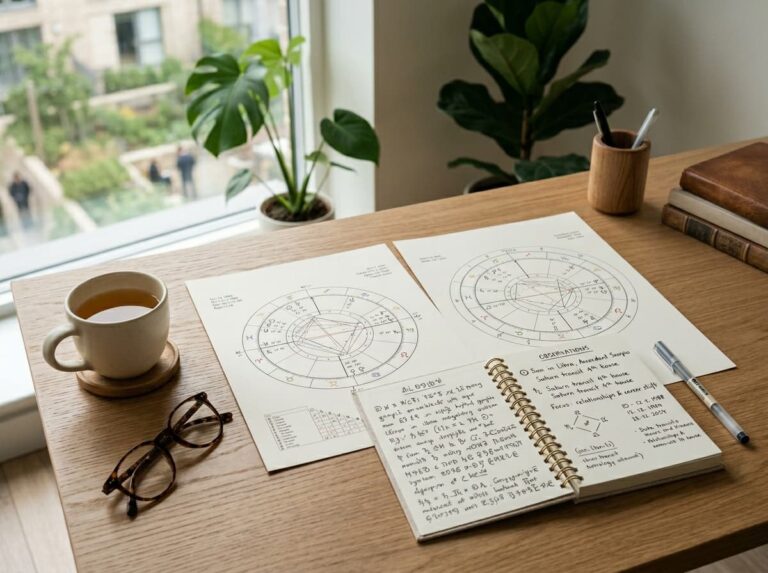
To check whether Mercury, Venus, or Mars is retrograde in your current Solar Return — and which house it occupies — generate your chart at astrocore.pro. The free calculator produces a dual chart showing your Solar Return and natal chart together, which is the format you need to see how retrograde placements connect to your permanent natal positions.
For a full interpretation that integrates retrograde planets with the rest of your Solar Return picture, professional readings are available at astrocore.pro.
Go Deeper
Retrograde Mercury, Venus, and Mars in the Solar Return are covered in complete detail — including house-by-house delineations, aspect modifications, and extended In Practice examples — in Astrology Made Easy: Solar Returns, Volume 3, available on Amazon
Rowena Winslow is a professional astrologer and the author of the Astrology Made Easy series. Her practice covers natal charts, Solar Returns, and predictive astrology. astrocore.pro

Leave a Reply